5 min read
Class 3 vs Class 4 Gas Lift: Which One for an Office Chair?
Class 4 gas lift vs Class 3 gas lift: how they differ, which suits your office chair, signs of failure and replacement at our workshop. Ask us today.
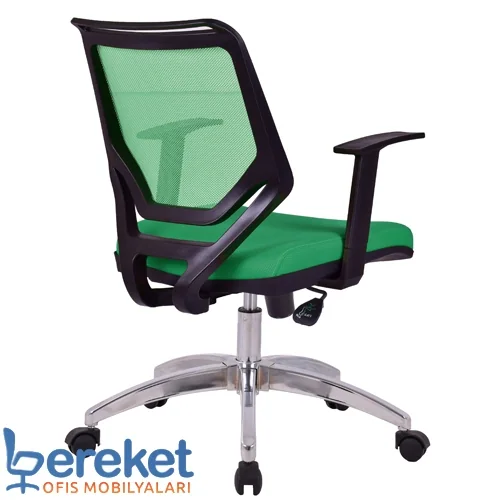
The gas lift is the part of an office chair that sets your seat height and carries your weight every time you sit down. The difference between a Class 4 gas lift and a Class 3 gas lift decides how long the chair keeps working smoothly. Here we compare both classes in plain terms.
What does an office chair gas lift do?
An office chair gas lift is a sealed cylinder filled with pressurized gas that connects the seat to the base. When you pull the height lever, a valve opens and the seat rises or lowers. The same cylinder supports your body weight all day and softens the impact each time you sit down, protecting both the chair and you.
It is also called a gas cylinder or chair piston, and with the right tools it is quick to replace.
In short, a gas lift is responsible for:
- Height adjustment: matching the seat to your desk and body.
- Load bearing: carrying the user's weight continuously.
- Cushioning: absorbing the shock when you sit down.
What are Class 3 and Class 4 gas lifts?
Class 3 and Class 4 are durability classes commonly used across the office chair industry, usually based on standards such as DIN 4550 and EN 16955. A higher class means a thicker tube wall, a sturdier internal design and a higher tested load. In practice, Class 4 is the stronger, longer-lasting class compared with Class 3.
Class 3 gas lift
Class 3 is the usual choice for standard office use. For a task chair used a few hours a day by the same person, it generally performs well, and it tends to cost less.
Class 4 gas lift
A Class 4 gas lift has a heavier-duty body designed for higher loads. It is the safer pick for long working days, shift work, shared chairs and heavier users, and it is common in executive chairs.
Note that class alone does not guarantee quality; seals and correct fitting matter too.
Class 3 vs Class 4 gas lift comparison
The core difference between Class 3 and Class 4 is durability and how hard the chair is used. Class 3 is an economical option suited to everyday office work. Class 4 offers a higher load rating, a thicker body and a longer service life under heavy use. The table below compares both classes in general terms.
| Feature | Class 3 gas lift | Class 4 gas lift |
|---|---|---|
| Durability class | Medium | High |
| Load rating | For standard users | For higher loads |
| Body | Standard wall thickness | Thicker, sturdier body |
| Best for | Everyday office use | Long hours, shifts, shared use |
| Typical chair | Task and visitor chairs | Executive and heavily used task chairs |
| Expected lifespan | Adequate under normal use | Longer under heavy use |
| Cost | More economical | Slightly higher |
These are general guidelines; exact load values vary by manufacturer.
Which one should you choose for an office chair?
The right gas lift depends on how long and by whom the chair will be used. For a task chair used a few hours a day, Class 3 is often enough. If people sit for a full working day or longer, if several people share the chair, or if the user is heavier, Class 4 is the better choice.
A quick rule of thumb:
- Class 3 may be enough: home offices, short sessions, swivel visitor chairs.
- Class 4 recommended: call centers, shift work, open-plan offices, long desk hours.
- Class 4 preferred: executive chairs, heavier users, chairs shared by several people a day.
For corporate orders, ask about the gas lift class at the quotation stage.
How do you know your gas lift is failing?
The clearest sign of a failing gas lift is a seat that slowly sinks while you sit on it. Other warning signs include a height lever that does nothing, a seat that will not rise, a hard knock when you sit down, or squeaking and wobbling when you swivel. Any of these means the cylinder should be checked soon.
The symptoms we see most often in our service department:
- Sinking seat: the gas seal has failed; this is the most common fault.
- Seat will not rise: a valve or gas pressure problem.
- Loose lever: the issue may be in the mechanism or in the cylinder valve.
- Hard landing: the cushioning effect has worn out.
- Wobble: the tube is worn or the tapered fit has loosened.
Acting early usually means replacing one part instead of the whole chair.
When should a gas lift be replaced?
A gas lift should be replaced as soon as it stops holding the height you set or shows the symptoms above. How long one lasts depends on usage intensity, user weight and the cylinder class. If the rest of the chair is sound, a new gas lift restores smooth height adjustment, so you rarely need a new chair.
When replacing, pay attention to:
- Length: cylinders come in different heights and stroke lengths; choose one that suits your desk.
- Class: for a heavily used chair, this is a good moment to upgrade to Class 4.
- Fit: the cylinder must match the mechanism and base.
Gas lift replacement and spare parts at our workshop
Our workshop replaces gas lifts on mesh office chairs and sells spare parts, including cylinders. When you bring a chair in, we also check the mechanism, base, casters, armrests, foam and mesh, and replace only what is needed. That way your chair goes back into service instead of into the bin, and you avoid the cost of a new one.
As a manufacturer, we know which parts fit together and can plan maintenance for corporate fleets. See our mesh chair repair page for details.
If your chair is beyond repair, browse our made-to-order mesh work chairs and, for long hours, our executive mesh office chairs.
Get the right gas lift for your chair
Choosing the right gas lift determines how comfortable your chair stays and how long it lasts. If you are not sure whether you need Class 3 or Class 4, just tell us how the chair is used and we will help you pick the right part or chair. We respond quickly to requests for replacement, spare parts and bulk orders.
For pricing, request a quote or reach us by WhatsApp or phone through our contact page.
Frequently asked questions
Class 4 is generally regarded as the higher-load, more durable class. It pays off under heavy, long daily use, while Class 3 is often enough for chairs used a few hours a day.
A sinking seat is the most common gas lift fault and usually means the gas seal has failed. Gas lifts are replaced rather than repaired; if the rest of the chair is sound, swapping the cylinder is enough.
In most office chairs this is possible if the mechanism and base sockets are compatible. Send us a photo of the chair or bring it to our workshop so we can check length and fit.
It can be done with proper tools, but incorrect removal can damage the base or mechanism. If you are unsure, we replace it at our workshop and check the other parts at the same time.
Yes. We supply gas lifts as well as bases, casters, mechanisms, armrests, foam and mesh. Request a quote or message us on WhatsApp for pricing and compatibility.